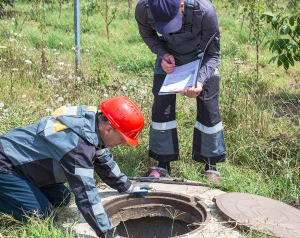
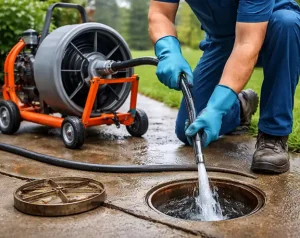
A sewer can back up even when cleaning solved the problem. Cleaning and repair are not the same job. A cable may open a path through grease, roots, paper, or sludge, while the condition that caused the clog stays inside the pipe. A cracked joint can keep letting roots enter. A sag can hold water and solids. Heavy scale can leave less room for waste to pass. Even the access point used for cleaning can limit how much of the line gets reached. When backups return, the useful question is not only, “What blocked the pipe?” It is also, “Why did material collect there?” In this blog, we explain why sewer backups can return after cleaning, what technical issues may be causing them, and how those problems can be checked.
Why Sewer Cleaning Restores Flow Only For A Short Time
Mechanical cleaning often restores flow by creating an opening through a blockage. That helps, but an open path is not always a clean pipe. If a cutter passes through grease or roots without removing material from the full pipe wall, the sewer still has less room for flow. New paper and waste can catch on what remains.
EPA data on reported sewer blockage events found that grease caused 47%, grit, rock, and other debris caused 27%, roots caused 22%, and roots mixed with grease caused 4%. Those figures show why the same sewer can clog again even after flow returns. Tool size also matters. A small cable head can pass through a restriction without touching much of the wall. High-pressure water cleaning can wash away more loose grease and sludge, but it cannot fix:
- Cracked pipe walls
- Offset joints
- Corrosion
- Pipe deformation
- Collapsed sections
- Low or sunken pipe areas
Cleaning removes material. It does not rebuild the pipe.
Why Tree Roots Keep Returning In Your Sewer Line
Roots usually become a repeat sewer problem because an opening remains in the pipe. Roots can enter through cracked clay, separated joints, damaged fittings, or other weak points where moisture reaches the nearby soil. EPA blockage data links roots to about 22% of reported sewer blockage events, while another 4% involve both roots and grease.
Once fine roots enter, they can spread across the inside of the pipe. That growth acts like a screen. Toilet paper, grease, and solids catch on it until flow becomes restricted. Root cutting creates room again, but it does not seal the entry point. That is why roots may return after cleaning. Pipe material also affects the type of failure. The 2024 International Residential Code recognizes building sewer materials including:
- PVC
- ABS
- Cast iron
- Polyethylene
- Concrete
- Copper or copper alloy
- Stainless steel
- Polyolefin
- Vitrified clay
Different materials and joints can crack, shift, corrode, or separate in different ways. A camera can help show exactly where roots are entering.
How Pipe Slope Affects Sewer Line Flow And Backups
Gravity sewer lines need a steady downward slope so wastewater can carry solids toward the sewer connection. If the slope becomes too flat or part of the pipe sinks, water and solids may stay behind. Under the 2024 International Residential Code, horizontal drainage piping 3 inches or larger generally requires a minimum slope of 1/8 inch per foot, equal to about 1%. Pipe 2½ inches or smaller generally requires at least 1/4 inch per foot, or about 2%.
At a 1% slope, the pipe should drop about:
- 1.25 inches over 10 feet
- 3.125 inches over 25 feet
- 6.25 inches over 50 feet
- 12.5 inches over 100 feet
If part of that line settles, a belly can form. Wastewater sits in the low point instead of leaving the pipe completely. Paper and solids then settle in the standing water. Cleaning removes that material, but the low area remains. The next load of solids can begin collecting in the same place again.
How Pipe Diameter Limits Sewer Flow Capacity At Home
Pipe size and slope work together. A larger pipe provides more area for wastewater and solids, but code still limits how much drainage load it should carry. The 2024 IRC uses drainage fixture units, or DFUs, to estimate the drainage load created by toilets, sinks, showers, and other fixtures.
At a slope of 1/8 inch per foot, the code table allows:
- A 3-inch building drain or sewer to carry up to 36 DFUs
- A 4-inch building drain or sewer to carry up to 180 DFUs
- At 1/4 inch per foot, those limits rise to:
- 42 DFUs for a 3-inch pipe
- 216 DFUs for a 4-inch pipe
- At 1/2 inch per foot, the table lists:
- 50 DFUs for a 3-inch pipe
- 250 DFUs for a 4-inch pipe
These figures show why diameter, slope, and connected plumbing load all matter.
A pipe with heavy scale or grease effectively loses part of its usable opening, even if its outside diameter has not changed.
How Damaged Pipe Joints Trigger Repeat Sewer Backups
A sewer can keep clogging even when most of the line remains open. One damaged joint can create a small ledge where paper catches. A crack may allow roots or soil to enter. Corroded cast iron can develop rough scale that reduces the usable inside diameter. A partly collapsed section can reduce flow even more. These problems are structural, so a cable cannot remove them.
The 2024 IRC also states that drainage piping cannot become smaller in the direction of flow. The rule helps maintain carrying capacity as wastewater moves downstream. The same code contains useful technical rules for sewer relining. Its relining provisions apply to gravity building sewer and drain piping 4 inches or larger. Before relining, the existing pipe must be cleaned and descaled. That preparation matters because dirt, heavy scale, and loose material can interfere with the new liner. A camera may also reveal conditions where relining is not suitable, such as a major offset, severe deformation, or a collapsed section.
What Sewer Camera Inspections Show That Cleaning Misses
A sewer camera gives a live view of the pipe after enough blockage has been removed for the camera head to travel. It can show conditions that cannot be confirmed from a drain opening alone.
A camera may reveal:
- Roots entering through joints
- Heavy grease deposits
- Mineral or corrosion scale
- Cracked pipe walls
- Offset connections
- Standing water
- Pipe deformation
- Partial collapse
- Foreign objects
- Changes between pipe materials
Camera inspection also has limits. Thick sewage, cloudy water, grease, or a complete blockage can hide the pipe wall. Standing water may indicate a low section, but video alone does not provide an exact slope measurement. Elevation measurements may still be needed.
The 2024 IRC shows how important camera checks can be during sewer work. Pipe-burst replacements require a recorded internal video camera survey after installation. The code also requires sewer sections to be cleaned and descaled before relining. Many sewer cameras can also work with locating equipment above ground. That helps mark where a buried defect sits before repair work begins.
Conclusion Repeat sewer backups often mean something inside the line keeps collecting waste. Grease, roots, poor slope, rough pipe walls, offset joints, and structural damage can remain after basic cleaning. A useful inspection looks at both the clog and the condition around it. We help homeowners identify hidden sewer problems before they lead to another backup. Seeing the pipe from inside can show where flow is restricted and whether cleaning, repair, relining, or replacement makes more sense. Call Urban Bay Engineering Inc. today and get clear answers before the next backup starts.